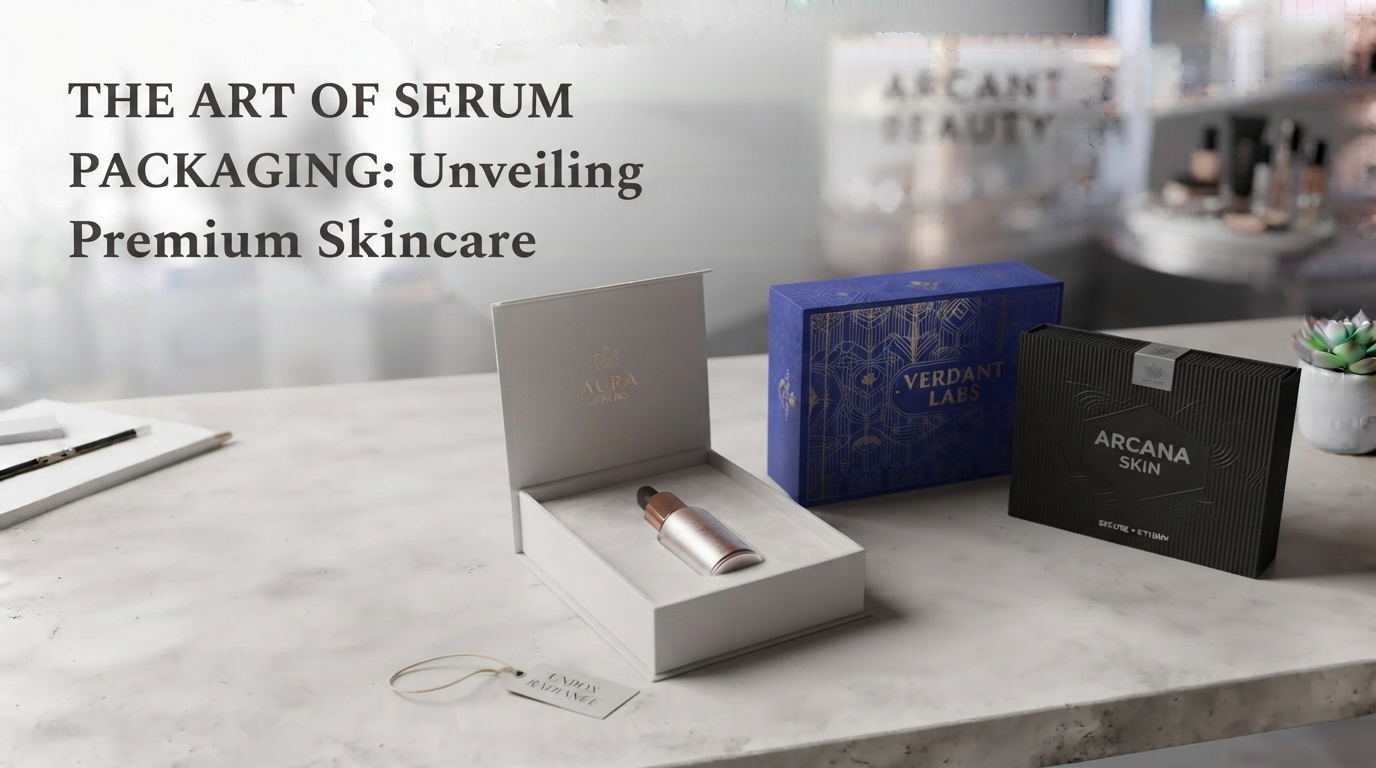
In the skincare industry, packaging plays an important role in shaping how customers perceive a product. Serums are often positioned as targeted, premium skincare solutions, so their packaging needs to communicate quality while protecting the product and presenting the brand consistently.

Whether a serum comes in a glass dropper bottle, pump bottle, or another specialized container, the right packaging can create a more organized and professional presentation. It can also provide space for product information, branding, ingredients, directions, and other details customers expect to see.
For skincare businesses developing packaging around their products, custom packaging boxes can provide a flexible approach to packaging based on product dimensions, branding, presentation goals, and distribution requirements.
Why Serum Packaging Matters
Serums are commonly associated with targeted skincare concerns and concentrated formulas. Because of this positioning, presentation can have a meaningful influence on the overall customer experience.
Well-planned packaging can help a skincare brand:
- Protect the serum container
- Create a professional first impression
- Communicate important product information
- Strengthen visual brand identity
- Organize the product for retail display
- Improve the unboxing experience
- Create consistency across a skincare collection
The packaging should complement the serum container rather than compete with it.
Start With the Actual Serum Bottle
One of the most important steps when developing serum packaging is measuring the actual product.
A serum bottle can include several components that affect the required box dimensions. These may include the bottle body, shoulder, neck, dropper, pump, cap, and decorative elements.
The package should therefore be planned around the complete closed product rather than the bottle body alone.
Important measurements may include:
- Overall height
- Maximum width
- Bottle depth or diameter
- Cap dimensions
- Dropper or pump dimensions
- Product weight
- Required internal clearance
Accurate measurements can help reduce fit problems and unnecessary empty space.
Choosing the Right Serum Box Structure
Different serum products may require different packaging structures.
A lightweight skincare bottle may work well with a straightforward folding carton, while a premium serum collection may benefit from a more substantial presentation format.
The appropriate structure can depend on:
- Bottle size
- Bottle shape
- Product weight
- Retail requirements
- Shipping method
- Brand positioning
- Desired opening experience
- Whether an insert is required
The goal is to balance appearance, protection, usability, and production requirements.
Using Inserts for Serum Bottles
Some serum bottles benefit from an internal insert that keeps the container positioned within the package.
An insert may be useful when:
- The bottle has a narrow or unusual shape
- The package contains multiple skincare products
- A dropper bottle needs additional positioning
- The product requires a specific presentation angle
- Accessories are included
- The brand wants a more structured unboxing experience
Depending on the project, inserts can be made from paperboard, cardboard, foam, or other suitable materials.
An insert should be considered as part of the overall package rather than as an afterthought.
Building a Consistent Beauty Packaging System
Skincare brands often sell more than one product. A collection might include serums, moisturizers, cleansers, toners, creams, masks, or eye treatments.
Using a coordinated packaging system can help customers recognize the brand across different products.
For brands developing multiple beauty products, branded custom beauty product box solutions can help create visual consistency while allowing individual products to have their own names, colors, and product information.
A cohesive system may use consistent:
- Logo placement
- Typography
- Brand colors
- Product naming
- Graphic elements
- Finishing techniques
- Layout structure
Using Packaging to Communicate Product Information
Serum packaging boxes has limited space, so information should be organized carefully.
Depending on the product and applicable requirements, packaging may include:
- Product name
- Serum type
- Key product information
- Ingredients
- Directions
- Net contents
- Brand name
- Website
- Barcode
- Warnings or other relevant information
Important information should remain easy to locate.
A clean hierarchy can help customers understand what the product is without making the package appear crowded.
Creating Premium Serum Presentation
Many skincare brands position serums as premium or specialized products. Packaging can support that positioning through thoughtful structural and visual choices.
A premium presentation does not necessarily require excessive decoration.
Instead, brands can focus on:
- Clean typography
- High-quality artwork
- Balanced spacing
- Appropriate materials
- Carefully selected finishes
- A well-fitted interior
- Consistent branding
The result can feel sophisticated without becoming visually overwhelming.
Printing and Branding Options
Printed packaging provides a large surface for communicating a skincare brand’s identity.
A serum package may feature:
- Logo
- Product name
- Collection name
- Product description
- Shade or variant information
- Instructions
- Brand messaging
- Website or social information
- Barcode or SKU
Interior printing can also be considered for additional branding or product messaging.
When developing artwork, brands should make sure the design works across the entire package rather than focusing only on the front panel.
Finishing Options for Serum Packaging
Finishing techniques can add visual or tactile details to skincare packaging.
Matte Finish
A matte surface can create a clean and understated appearance and can work particularly well with minimalist skincare designs.
Gloss Finish
Gloss can create visual contrast and highlight selected areas of the artwork.
Soft-Touch Finish
Soft-touch treatments can add a smooth tactile quality to the package.
Foil
Foil can be used to emphasize logos, product names, or selected decorative elements.
Embossing and Debossing
These techniques can add texture and dimension to branding elements.
Spot UV
Spot UV can create selective glossy areas against a matte surface, helping specific design elements stand out.
Finishing should support the brand’s identity rather than distract from the product information.
Serum Packaging for Retail
Retail environments require packaging that communicates quickly.
A customer should be able to identify the brand and product without having to search through excessive text or complicated graphics.
Clear product naming and strong visual hierarchy can be particularly useful when several serum products are displayed together.
Packaging may also need to accommodate retail considerations such as shelf arrangement, product visibility, barcode placement, and display orientation.
The specific requirements depend on the sales environment.
Serum Packaging for Ecommerce
Ecommerce brands have another important packaging consideration: the customer often sees the product digitally before receiving it physically.
The packaging should therefore reinforce the visual identity presented on the website, marketplace listing, or social media.
When the package arrives, the customer should ideally recognize the same brand and product immediately.
However, a serum presentation box is not necessarily a shipping box. Depending on the distribution method, the packaged product may need an additional mailer or shipping carton.
Planning the presentation package and shipping system together can help create a more complete ecommerce experience.
Designing Packaging for Serum Collections
Serums are frequently sold in multiple variants.
A skincare company might offer products focused on hydration, brightening, balancing, smoothing, or other targeted routines.
A consistent packaging system can make these variations easier to distinguish.
For example, the brand might maintain the same structural format while changing:
- Product name
- Accent graphics
- Variant information
- Color treatment
- Collection identifier
This allows customers to recognize the overall brand while still distinguishing between individual products.
Sustainability Considerations
Packaging decisions can also include environmental considerations.
Brands may evaluate:
- Material selection
- Box dimensions
- Recyclability
- Insert materials
- Overall material usage
- Shipping efficiency
Right-sizing can reduce unnecessary empty space, but the package should still provide an appropriate fit and presentation for the serum bottle.
Sustainability should therefore be considered alongside product protection, design, manufacturing, and distribution requirements.
Common Serum Packaging Mistakes
Designing Before Measuring the Bottle
Artwork and structure should be based on the actual product dimensions.
Ignoring the Dropper or Pump
These components can affect the overall height and internal clearance.
Making the Box Excessively Large
Too much empty space can make the package feel inefficient and may create unnecessary material use.
Overcrowding the Artwork
Trying to place every possible message on the package can reduce readability.
Inconsistent Collection Design
Products that belong to the same skincare line should generally feel connected visually.
Forgetting the Shipping Environment
A retail presentation package may require additional outer protection during delivery.
How to Plan Effective Serum Packaging
A practical packaging process can make development more organized.
1. Measure the complete serum container.
Record the maximum dimensions of the closed bottle, including cap, dropper, or pump.
2. Identify the product configuration.
Determine whether the box will contain one serum or multiple products.
3. Define protection requirements.
Consider the bottle material, weight, shape, and expected distribution conditions.
4. Choose the packaging structure.
Select a format that suits the product and intended customer experience.
5. Determine whether an insert is necessary.
Consider bottle positioning, accessories, and presentation requirements.
6. Develop the artwork.
Create a clear visual hierarchy for the logo, product name, and important information.
7. Select finishing details.
Choose finishes that complement the brand’s positioning.
8. Review the sales channel.
Consider whether the packaging is intended for retail, ecommerce, wholesale, gifting, or a combination.
9. Review a sample when appropriate.
A sample can help evaluate physical fit, structure, artwork placement, and overall presentation before larger production.
Frequently Asked Questions
1. Why are serum boxes important for skincare brands?
Serum boxes can protect the product, communicate important information, strengthen brand identity, and create a more professional presentation for customers.
2. How should a serum box be sized?
The box should be planned around the complete closed serum container, including the bottle, cap, dropper, pump, and other permanent components that affect its overall dimensions.
3. Can serum packaging include custom inserts?
Yes. Inserts can be considered when a serum bottle requires additional positioning, when several products are packaged together, or when a more structured presentation is desired.
4. Can serum boxes be customized with premium finishes?
Depending on the packaging project, brands can consider options such as matte, gloss, soft-touch, foil, embossing, debossing, and Spot UV.
5. Can serum packaging be used for ecommerce products?
Yes. Serum packaging can serve as presentation or retail packaging for ecommerce products. However, brands should separately evaluate whether an outer shipping package is needed for transportation.
Conclusion
Serum packaging combines product protection, skincare branding, information, and presentation in a relatively small package.
The best approach starts with the actual serum container. Once its dimensions, weight, structure, and distribution requirements are understood, brands can make more informed decisions about the box format, inserts, artwork, materials, and finishing.
A well-designed package can make an individual serum look professional while also helping a complete skincare collection feel consistent. Whether the product is sold in retail stores, through ecommerce, or as part of a beauty gift set, packaging can become an important part of the customer’s overall experience.
For brands developing skincare products, thoughtful packaging is not simply about making the box attractive. It is about creating a practical and recognizable presentation that fits the product and supports the brand.