Living near the ocean has a lot of perks. The breeze, the views, the mild temperatures year round. But that same salty air and coastal moisture that makes Long Beach such a nice place to live also creates some real problems for homes in the area. This is exactly why a Long Beach inspection often turns up issues that inspectors in other parts of the country rarely see.

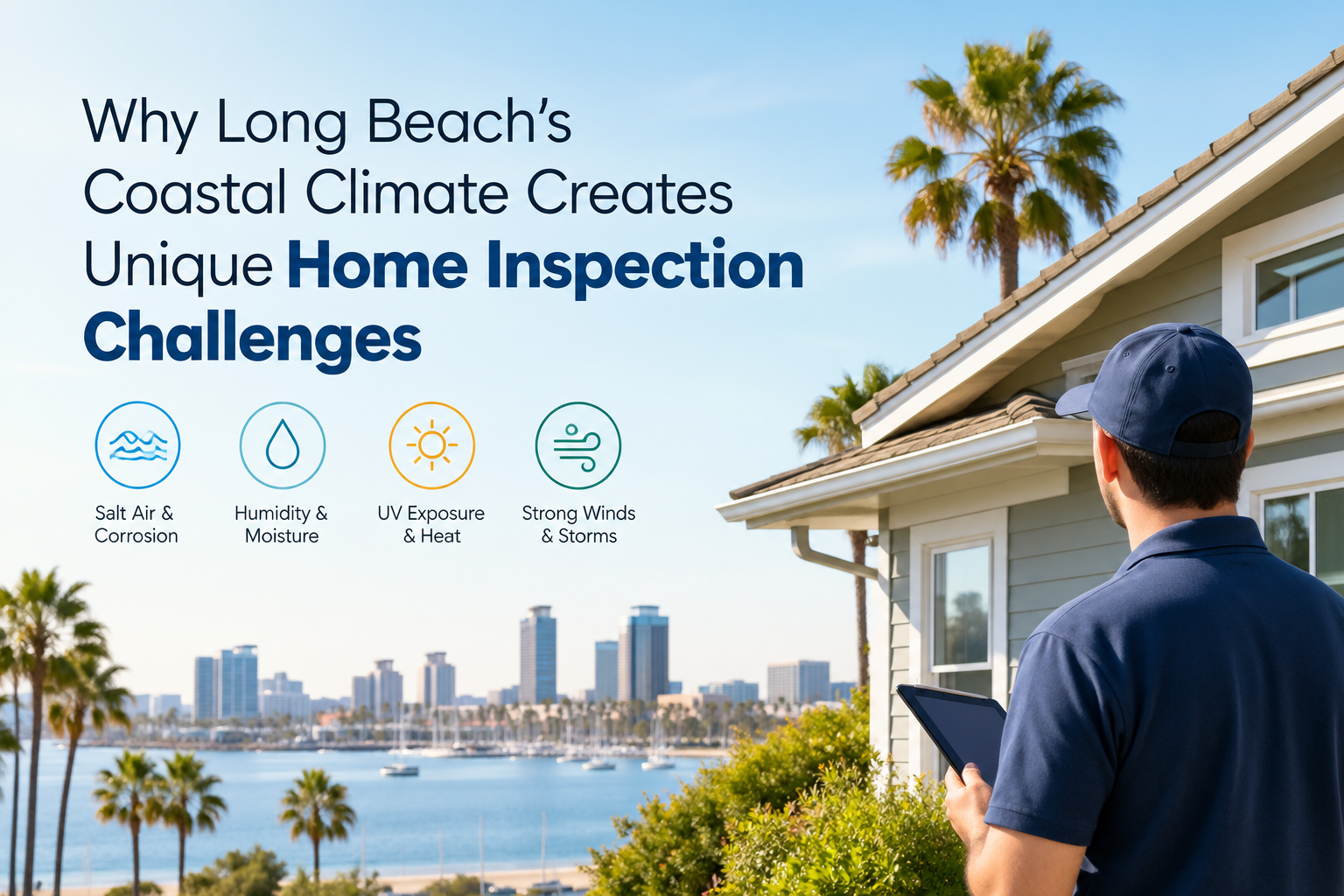
Homes that sit close to the water deal with a slow, steady kind of wear that isn’t always obvious at first glance. Salt in the air settles on everything, from roof shingles to window frames to the metal parts hidden inside walls and attics. Over time, this leads to corrosion that regular homes further inland just don’t have to worry about as much.
Salt Air and Corrosion
One of the biggest things inspectors look for in coastal homes is rust and corrosion on metal components. This includes things like nails, screws, electrical panels, HVAC units, and even plumbing fixtures. Salt speeds up the rusting process significantly, so a metal part that might last twenty years in a dry inland climate could start showing serious wear in half that time near the coast.
Roofing is another area that takes a hit. Metal flashing around chimneys and vents tends to corrode faster in salty air, which can lead to leaks that homeowners don’t notice until water damage shows up inside the house. This is one reason coastal roof inspections often go a little deeper than a standard checklist.
Humidity and Moisture Problems
Coastal areas also tend to have higher humidity levels, especially compared to drier parts of Southern California just a short drive inland. That extra moisture in the air creates the perfect environment for a whole different set of concerns, including mold.
A mold inspection in a coastal home often reveals growth in places that would stay dry in a less humid climate. Bathrooms, closets, crawl spaces, and even the inside of exterior walls can hold onto moisture longer near the ocean. Without proper ventilation, that trapped humidity turns into a mold problem fairly quickly, sometimes within just a year or two of a home being built or renovated.
Wood framing and trim are also more vulnerable in this kind of environment. Constant exposure to moist air can cause wood to swell, warp, or rot faster than it would in a dry climate. Inspectors pay close attention to areas where wood meets the ground or sits close to exterior walls, since that’s usually where problems start.
Foundation and Drainage Concerns
Coastal soil composition can also be different from what you find further inland, and that affects how a home’s foundation holds up over time. Sandy or loose soil doesn’t always provide the same stability as denser inland soil, which can lead to settling issues that show up as small cracks in walls or uneven flooring.
Drainage is another factor worth paying attention to. Homes near the coast sometimes deal with higher water tables, meaning groundwater sits closer to the surface. This can affect how well a foundation drains after rain and increase the risk of water finding its way into crawl spaces or basements.
What This Means for Buyers and Sellers
If you’re buying or selling a home in a coastal area like Long Beach, it helps to work with an inspector who actually understands these local conditions. Someone who mostly inspects homes in dry inland neighborhoods might not think to check for the same corrosion patterns or moisture buildup that a coastal specialist would catch right away.
For sellers, addressing small signs of rust or moisture early can prevent a bigger, more expensive problem from showing up during a buyer’s inspection later. A little maintenance, like resealing windows or improving attic ventilation, can go a long way in a salty, humid climate.
For buyers, it’s worth asking your inspector directly whether they have experience with coastal properties. A thorough long beach inspection should include a close look at metal components, roofing materials, ventilation, and any visible signs of past water intrusion, not just the standard checklist used for homes further from the water.
The Bottom Line
Coastal living comes with tradeoffs, and home maintenance is one of them. The same ocean air that makes Long Beach such a desirable place to live also accelerates wear on homes in ways that aren’t always visible right away. Understanding these unique challenges, and making sure your inspection accounts for them, is one of the best ways to protect your investment whether you’re buying, selling, or just planning to stay in your coastal home for years to come.